Online first
Bieżący numer
Archiwum
O czasopiśmie
Polityka etyki publikacyjnej
System antyplagiatowy
Instrukcje dla Autorów
Instrukcje dla Recenzentów
Rada Redakcyjna
Komitet Redakcyjny
Recenzenci
Wszyscy recenzenci
2025
2024
2023
2022
2021
2020
2019
2018
2017
2016
Kontakt
Bazy indeksacyjne
Klauzula przetwarzania danych osobowych (RODO)

PRACA ORYGINALNA
Assessment of the prevalence of orthorexic behaviours among selected groups of young women
1
Institute of Human Nutrition, Department of Human Nutrition, Warsaw University of Life Sciences, Warsaw, Poland
2
Institute of Human Nutrition, Department of Dietetics, Warsaw University of Life Sciences, Warsaw, Poland
Autor do korespondencji
Agata Paulina Białecka-Dębek
Institute of Human Nutrition, Department of Human Nutrition, Warsaw University of Life Sciences, Warsaw, Poland
Institute of Human Nutrition, Department of Human Nutrition, Warsaw University of Life Sciences, Warsaw, Poland
Med Og Nauk Zdr. 2026;32(2):149-154

SŁOWA KLUCZOWE
DZIEDZINY
STRESZCZENIE
Wprowadzenie i cel:
Celem niniejszego badania było określenie tendencji do występowania zachowań ortorektycznych wśród różnych grup młodych kobiet w Polsce.
Materiał i metody:
Badanie przekrojowe przeprowadzono wśród trzech grup: instruktorek fitness (N = 96), obecnych studentek i absolwentek kierunków związanych z żywieniem lub dietetyką (N = 113) oraz grupy kontrolnej składającej się z młodych kobiet niezwiązanych zawodowo z żywieniem i aktywnością sportową (N = 100). Do określenia częstości występowania zachowań ortorektycznych wykorzystano polską wersję kwestionariusza ORTO-15.
Wyniki:
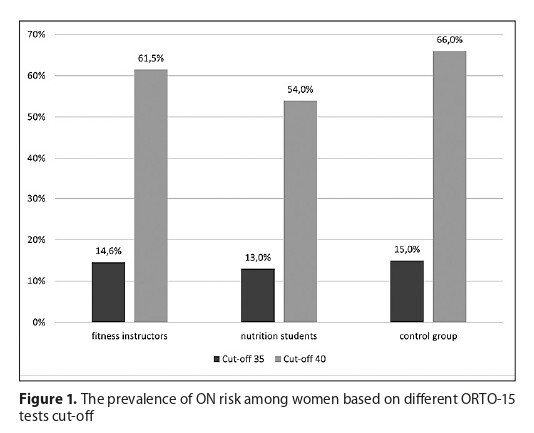
Nie stwierdzono różnicy istotnej statystycznie między wynikami uzyskanymi przez kobiety należące do poszczególnych grup, a średni wynik ORTO-15 wynosił powyżej wartości granicznej 35 pkt. Odsetek osób z wynikiem poniżej 35 pkt, wskazujący na ryzyko wystąpienia zachowań ortorektycznych, wynosił 15% wśród instruktorek fitness, 13% wśród studentek i absolwentek kierunków związanych z żywieniem oraz 15% w grupie kontrolnej. Wartość wskaźnika BMI odpowiadająca nadwadze (≥ 25 kg/m2) wiązała się z prawie 2,7-krotnym (95% CI 1,14–6,55) wzrostem ryzyka wystąpienia zachowań ortorektycznych. Kobiety stosujące specjalną dietę były 2,4 raza bardziej narażone na ryzyko wystąpienia zachowań ortorektycznych (95% CI 1,29–4,44) niż kobiety, które nie zgłaszały zmian w diecie.
Wnioski:
Badanie nie wykazało różnic w ryzyku wystąpienia zachowań ortorektycznych wśród instruktorek fitness, studentek kierunków związanych z żywieniem i absolwentek, wskazując na brak statystycznie istotnego związku między wykształceniem zawodowym lub akademickim a ryzykiem wystąpienia ortoreksji. Jednak większa ilość czasu poświęcana na aktywność fizyczną, wyższy wskaźnik BMI oraz przestrzeganie specjalnych diet wiązały się ze zwiększonym ryzykiem wystąpienia zachowań ortorektycznych.
Celem niniejszego badania było określenie tendencji do występowania zachowań ortorektycznych wśród różnych grup młodych kobiet w Polsce.
Materiał i metody:
Badanie przekrojowe przeprowadzono wśród trzech grup: instruktorek fitness (N = 96), obecnych studentek i absolwentek kierunków związanych z żywieniem lub dietetyką (N = 113) oraz grupy kontrolnej składającej się z młodych kobiet niezwiązanych zawodowo z żywieniem i aktywnością sportową (N = 100). Do określenia częstości występowania zachowań ortorektycznych wykorzystano polską wersję kwestionariusza ORTO-15.
Wyniki:
Nie stwierdzono różnicy istotnej statystycznie między wynikami uzyskanymi przez kobiety należące do poszczególnych grup, a średni wynik ORTO-15 wynosił powyżej wartości granicznej 35 pkt. Odsetek osób z wynikiem poniżej 35 pkt, wskazujący na ryzyko wystąpienia zachowań ortorektycznych, wynosił 15% wśród instruktorek fitness, 13% wśród studentek i absolwentek kierunków związanych z żywieniem oraz 15% w grupie kontrolnej. Wartość wskaźnika BMI odpowiadająca nadwadze (≥ 25 kg/m2) wiązała się z prawie 2,7-krotnym (95% CI 1,14–6,55) wzrostem ryzyka wystąpienia zachowań ortorektycznych. Kobiety stosujące specjalną dietę były 2,4 raza bardziej narażone na ryzyko wystąpienia zachowań ortorektycznych (95% CI 1,29–4,44) niż kobiety, które nie zgłaszały zmian w diecie.
Wnioski:
Badanie nie wykazało różnic w ryzyku wystąpienia zachowań ortorektycznych wśród instruktorek fitness, studentek kierunków związanych z żywieniem i absolwentek, wskazując na brak statystycznie istotnego związku między wykształceniem zawodowym lub akademickim a ryzykiem wystąpienia ortoreksji. Jednak większa ilość czasu poświęcana na aktywność fizyczną, wyższy wskaźnik BMI oraz przestrzeganie specjalnych diet wiązały się ze zwiększonym ryzykiem wystąpienia zachowań ortorektycznych.
Introduction and objective:
The aim of this study is to determine the orthorexic behaviours among different groups of young women in Poland
Material and methods:
A cross-sectional study was conducted among three groups: fitness instructors (n = 96), current and graduate students of nutrition sciences or dietetics (n = 113), and a control group consisting of young women professionally unrelated to nutrition and sports activities (n = 100). The Polish version of the Orthorexia Nervosa Questionnaire (ORTO-15) was used to determine the prevalence of the orthorexic behaviours.
Results:
There was no statistical difference between the three groups of participants, and all groups had a mean ORTO-15 score above the 35 cut-off. The percentage with scores below 35 indicates the risk of orthorexic behaviours was 15% among fitness instructors, 13% among nutrition students and graduates, and 15% in the control group. BMI indicating excess body weight (≥ 25 kg/m2) was associated with almost 2.7-fold (95% CI 1.14–6.55) higher risk of orthorexic behaviours. Women who followed a special diet were 2.4 times more likely to be at risk of orthorexic behaviours (95% CI 1.29–4.44) than those who did not report diet modifications.
Conclusions:
The study found no differences in the risk of orthorexia behaviours among fitness instructors, nutrition students, and graduates, indicating no statistically significant association between professional or educational involvement in nutrition or fitness and the risk of developing orthorexia. However, greater time devoted to physical activity, higher BMI, and adherence to special diets were associated with an increased risk of orthorexia behaviours.
The aim of this study is to determine the orthorexic behaviours among different groups of young women in Poland
Material and methods:
A cross-sectional study was conducted among three groups: fitness instructors (n = 96), current and graduate students of nutrition sciences or dietetics (n = 113), and a control group consisting of young women professionally unrelated to nutrition and sports activities (n = 100). The Polish version of the Orthorexia Nervosa Questionnaire (ORTO-15) was used to determine the prevalence of the orthorexic behaviours.
Results:
There was no statistical difference between the three groups of participants, and all groups had a mean ORTO-15 score above the 35 cut-off. The percentage with scores below 35 indicates the risk of orthorexic behaviours was 15% among fitness instructors, 13% among nutrition students and graduates, and 15% in the control group. BMI indicating excess body weight (≥ 25 kg/m2) was associated with almost 2.7-fold (95% CI 1.14–6.55) higher risk of orthorexic behaviours. Women who followed a special diet were 2.4 times more likely to be at risk of orthorexic behaviours (95% CI 1.29–4.44) than those who did not report diet modifications.
Conclusions:
The study found no differences in the risk of orthorexia behaviours among fitness instructors, nutrition students, and graduates, indicating no statistically significant association between professional or educational involvement in nutrition or fitness and the risk of developing orthorexia. However, greater time devoted to physical activity, higher BMI, and adherence to special diets were associated with an increased risk of orthorexia behaviours.
Białecka-Dębek AP, Kęszycka PK, Turczyńska M, Lange E, Gajewska D. Assessment of the prevalence of orthorexic behaviours among selected
groups of young women. Med Og Nauk Zdr. 2026;32(2):149–154. doi:10.26444/monz/221445
REFERENCJE (26)
1.
Cena H, Barthels F, Cuzzolaro M, Bratman S, Brytek-Matera A, Dunn T, Varga M, Missbach B, Donini LM. Definition and diagnostic criteria for orthorexia nervosa: a narrative review of the literature. Eat Weight Disord. 2019;24(2): 209–46. doi:10.1007/s40519-018-0606-y.
2.
Bhattacharya A, Cooper M, McAdams C, Peebles R, Timko CA. Cultural shifts in the symptoms of Anorexia Nervosa: The case of Orthorexia Nervosa. Appetite. 2022;170:105869. doi:10.1016/j.appet.2021.105869.
3.
Dittfeld A, Koszowska A, Fizia K, Ziora K. Orthorexia – a new eating disorder. Annales Academiae Medicae Silesiensis. 2013;67(6).
4.
Brytek-Matera A. Vegetarian diet and orthorexia nervosa: a review of the literature. Eat Weight Disord. 2021;26(1):1–11. doi:10.1007/s40519-019-00816-3.
5.
Grammatikopoulou MG, Gkiouras K, Markaki A, Theodoridis X, Tsakiri V, Mavridis P, Dardavessis T, Chourdakis M. Food addiction, orthorexia, and food-related stress among dietetics students. Eat Weight Disord. 2018;23(4):459–67. doi:10.1007/s40519-018-0514-1.
6.
Karakuş B. Orthorexia Nervosa Trends Among Students Of Nutrition And Dietetics Department At A University In Istanbul. North Clin Istanbul. 2017;4(2):117–123. doi:10.14744/nci.2017.20082.
7.
Almeida C, Vieira Borba V, Santos L. Orthorexia nervosa in a sample of Portuguese fitness participants. Eat Weight Disord. 2018;23(4):443–51. doi:10.1007/s40519-018-0517-y.
8.
Oberle CD, Watkins RS, Burkot AJ. Orthorexic eating behaviors related to exercise addiction and internal motivations in a sample of university students. Eat Weight Disord. 2018;23(1):67–74. doi:10.1007/s40519-017-0470-1.
9.
Rudolph S. The connection between exercise addiction and orthorexia nervosa in German fitness sports. Eat Weight Disord. 2018;23(5):581–6. doi:10.1007/s40519-017-0437-2.
10.
Colledge F, Cody R, Pühse U, Gerber M. Responses of fitness center employees to cases of suspected eating disorders or excessive exercise. J Eat Disord. 2020;8(1):8. doi:10.1186/s40337-020-0284-9.
11.
Brytek-Matera A, Krupa M, Poggiogalle E, Donini LM. Adaptation of the ORTHO-15 test to Polish women and men. Eat Weight Disord. 2014;19(1):69–76. doi:10.1007/s40519-014-0100-0.
12.
Donini LM, Marsili D, Graziani MP, Imbriale M, Cannella C. Orthorexia nervosa: Validation of a diagnosis questionnaire. Eat Weight Disord. 2005;10(2):e28–32. doi:10.1007/BF03327537.
13.
Missbach B, Dunn TM, König JS. We need new tools to assess Orthorexia Nervosa. A commentary on “Prevalence of Orthorexia Nervosa among College Students Based on Bratman’s Test and Associated Tendencies.” Appetite. 2017;108:521–4. doi:10.1016/j.appet.2016.07.010.
14.
Valente M, Syurina EV, Donini LM. Shedding light upon various tools to assess orthorexia nervosa: a critical literature review with a systematic search. Eat Weight Disord. 2019;24(4):671–82. doi:10.1007/s40519-019-00735-3.
15.
Dunn TM, Gibbs J, Whitney N, Starosta A. Prevalence of orthorexia nervosa is less than 1%: data from a US sample. Eat Weight Disord. 2017;22(1):185–92. doi:10.1007/s40519-016-0258-8.
16.
Gubiec E, Stetkiewicz-Lewandowicz A, Rasmus P, Sobów T. Orthorexia in a group of dietetics students. Med Og Nauk Zdr. 2015;21(1):95–100. doi:10.5604/20834543.1142367.
17.
Paludo AC, Magatão M, Martins HRF, Martins MVS, Kumstát M. Prevalence of Risk for Orthorexia in Athletes Using the ORTO-15 Questionnaire: A Systematic Mini-Review. Front Psychol. 2022;13:856185. doi:10.3389/fpsyg.2022.856185.
18.
Oberle CD, Lipschuetz SL. Orthorexia symptoms correlate with perceived muscularity and body fat, not BMI. Eat Weight Disord. 2018;23(3):363–8. doi:10.1007/s40519-018-0508-z.
19.
Godefroy V, Trinchera L, Dorard G. Optimizing the empirical assessment of orthorexia nervosa through EHQ and clarifying its relationship with BMI. Eat Weight Disord. 2021;26(2):649–59. doi:10.1007/s40519-020-00909-4.
20.
Łucka I, Mazur A, Łucka A, Sarzyńska I, Trojniak J, Kopańska M. Orthorexia as an Eating Disorder Spectrum—A Review of the Literature. Nutrients. 2024;16(19):3304. doi:10.3390/nu16193304.
21.
Clifford T, Blyth C. A pilot study comparing the prevalence of orthorexia nervosa in regular students and those in University sports teams. Eat Weight Disord. 2019;24(3):473–80. doi:10.1007/s40519-018-0584-0.
22.
Bert F, Gualano MR, Voglino G, Rossello P, Perret JP, Siliquini R. Orthorexia Nervosa: A cross-sectional study among athletes competing in endurance sports in Northern Italy. Sauers E, editor. PLoS ONE. 2019;14(8):e0221399. doi:10.1371/journal.pone.0221399.
23.
Barthels F, Meyer F, Pietrowsky R. Orthorexic and restrained eating behaviour in vegans, vegetarians, and individuals on a diet. Eat Weight Disord. 2018;23(2):159–66. doi:10.1007/s40519-018-0479-0.
24.
Parra-Fernández ML, Manzaneque-Cañadillas M, Onieva-Zafra MD, Fernández-Martínez E, Fernández-Muñoz JJ, Prado-Laguna M del C, Brytek-Matera A. Pathological Preoccupation with Healthy Eating (Orthorexia Nervosa) in a Spanish Sample with Vegetarian, Vegan, and Non-Vegetarian Dietary Patterns. Nutrients. 2020;12(12):3907. doi:10.3390/nu12123907.
25.
Toulany A, Saunders NR, Kurdyak P, Strauss R, Fu L, Joh-Carnella N, Chen S, Guttmann A, Stukel TA. Acute presentations of eating disorders among adolescents and adults before and during the COVID-19 pandemic in Ontario, Canada. CMAJ. 2023;195(38):E1291–9. doi:10.1503/cmaj.221318.
26.
Yücel Ü, Kömbeci K, Tuğrul G, Uçar A, Yüksel S. Changes in Diet, Lifestyle and Orthorexia Nervosa Attitudes of Vegetarian, Vegan and Omnivorous Individuals in COVID-19 Pandemic. International Journal of Nutrition Sciences. 2021;6(2). doi:10.30476/ijns.2021.90358.1126.
Udostępnij
ARTYKUŁ POWIĄZANY
| eISSN: | 2084-4905 |
| ISSN: | 2083-4543 |

Przetwarzamy dane osobowe zbierane podczas odwiedzania serwisu. Realizacja funkcji pozyskiwania informacji o użytkownikach i ich zachowaniu odbywa się poprzez dobrowolnie wprowadzone w formularzach informacje oraz zapisywanie w urządzeniach końcowych plików cookies (tzw. ciasteczka). Dane, w tym pliki cookies, wykorzystywane są w celu realizacji usług, zapewnienia wygodnego korzystania ze strony oraz w celu monitorowania ruchu zgodnie z Polityką prywatności. Dane są także zbierane i przetwarzane przez narzędzie Google Analytics (więcej).
Możesz zmienić ustawienia cookies w swojej przeglądarce. Ograniczenie stosowania plików cookies w konfiguracji przeglądarki może wpłynąć na niektóre funkcjonalności dostępne na stronie.
Możesz zmienić ustawienia cookies w swojej przeglądarce. Ograniczenie stosowania plików cookies w konfiguracji przeglądarki może wpłynąć na niektóre funkcjonalności dostępne na stronie.